
THE SOCIETY UNFILTERED
Welcome to The Society Unfiltered
This is where we drop the noise and get real about skin, wellness, and what it actually means to feel good in your body. Think expert insight without the overwhelm, regenerative conversations without the fluff, and modern aesthetics explained like your best friend would. Inside The Society Unfiltered, we’re sharing what we love, what works, and what’s worth knowing — thoughtfully, honestly, and always with intention. Welcome in. You’re exactly where you belong.
Your Skin Is Talking. Are You Listening?
The Hormone-Skin Connection Nobody Warned You About
Our providers have been doing this long enough to know that most skin concerns aren't really skin concerns at all.
The dullness. The sudden breakouts in your 30s and 40s. The thinning, crepey texture that no serum seems to touch. The jawline that looks a little softer than it used to. These are the things we see every day in our treatment room - and almost always, what's showing up on the face is a signal from somewhere much deeper.
Your hormones.
Here's what most providers won't tell you: your skin is one of the most hormone-sensitive organs in your entire body. Estrogen, progesterone, testosterone, cortisol, and thyroid hormones don't just regulate your mood, metabolism, and cycle. They actively govern collagen production, oil gland activity, skin thickness, cellular turnover, and the structural integrity of your face. When those hormones shift - and they will shift - your skin is often the first place it shows.
This isn't about vanity. It's about biology.
What Hormones Are Actually Doing to Your Skin
Start with estrogen, because it's doing more for your skin than you probably realize.
Estrogen stimulates collagen synthesis, supports skin thickness, maintains moisture levels, and helps keep your skin barrier functioning as it should. At peak levels, it's what makes skin look plump, elastic, and luminous. As estrogen declines - which begins gradually in your mid-to-late 30s and accelerates dramatically in perimenopause - collagen production drops with it. Studies suggest women lose up to 30% of their collagen in the first five years after menopause. That's not a gradual fade. That's a structural shift.
Progesterone plays a role of its own, influencing sebum production and skin sensitivity. When it drops relative to estrogen, the classic "second puberty" phenomenon appears - breakouts, oiliness, sensitivity - even in women who never struggled with acne before.
Testosterone (yes, women have it too) supports skin firmness and density. But when it becomes elevated relative to falling estrogen and progesterone - a common pattern in perimenopause - it can drive chin and jawline acne, increased hair in unwanted places, and accelerated changes in skin texture.
And then there's cortisol. Chronic stress keeps cortisol elevated, which breaks down collagen, triggers inflammation, worsens barrier function, and disrupts sleep - which is when skin does most of its repair work. For women managing a demanding career, a busy household, and the invisible mental load that comes with it, cortisol is likely working against skin health every single day.
Perimenopause: The Conversation Nobody Prepared You For
Perimenopause can begin anywhere from the mid-30s to the late 40s, and it rarely announces itself clearly. More often, it shows up as a constellation of subtle changes: irregular cycles, disrupted sleep, mood shifts, brain fog, a stubborn few pounds that appeared without explanation, and yes - changes in the skin that feel like they happened overnight.
We talk to women every week who have been told their labs are "normal" while experiencing every symptom of hormonal dysregulation. Normal is a range. What matters is whether your hormones are optimal for your biology.
During perimenopause, estrogen doesn't just decline - it fluctuates wildly before it drops for good. That volatility is often what drives the skin chaos: one week dry and dull, the next breaking out. The sebaceous glands don't know what to do. The collagen-building machinery is getting mixed signals. The skin barrier is compromised.
The skin changes associated with perimenopause that come up most often at REGEN Society:
- Loss of structural support along the midface and jawline
- Increased skin laxity and "crepe" texture, particularly around the neck and eyes
- Hyperpigmentation that didn't exist before or is suddenly worsening
- Persistent low-grade inflammation - redness, sensitivity, reactive skin
- Adult acne concentrated along the jaw and chin.
- Overall dullness and loss of that lit-from-within quality
None of these are inevitable. But they do require a more informed response than simply adding another serum to your shelf.
What Can Be Done About It
At REGEN Society, this is approached from two directions simultaneously: inside and out.
On the inside, it starts with labs. Understanding actual hormone levels - not just whether they're "in range," but whether they're optimal - is the foundation of everything done in the wellness space. From there, a protocol can be built that supports hormonal health and, by extension, the skin.
On the outside, treatment plans are designed to address what the hormonal changes have already affected: collagen loss, structural support, skin quality, and regeneration. The goal is never to put a bandage on a deeper issue. It's to treat the tissue while addressing the root cause.
The two approaches compound. And that's exactly how it should be.
Our Summer Peptide Stack for Hormonal Skin Support
Summer is an ideal time to start a targeted peptide protocol - the lighter schedule, the mindset shift, the motivation that comes with wanting to feel good in your body. Here's what we are recommending this season for women navigating hormonal skin changes:
GHK-Cu (Copper Peptide) One of the most well-researched peptides for skin regeneration. GHK-Cu stimulates collagen and elastin synthesis, promotes wound healing, and has meaningful antioxidant and anti-inflammatory properties. For skin that has thinned or lost elasticity due to estrogen decline, it's a powerful place to start.
Epitalon Epitalon works at the cellular level - it activates telomerase, the enzyme that protects the ends of chromosomes from age-related shortening. It supports circadian rhythm regulation (critical for skin repair, which happens largely at night), promotes cellular longevity, and has been shown to have meaningful anti-aging effects at the deepest level of biology. For perimenopausal women, the circadian support alone is worth noting - disrupted sleep is both a symptom and an accelerator of hormonal aging.
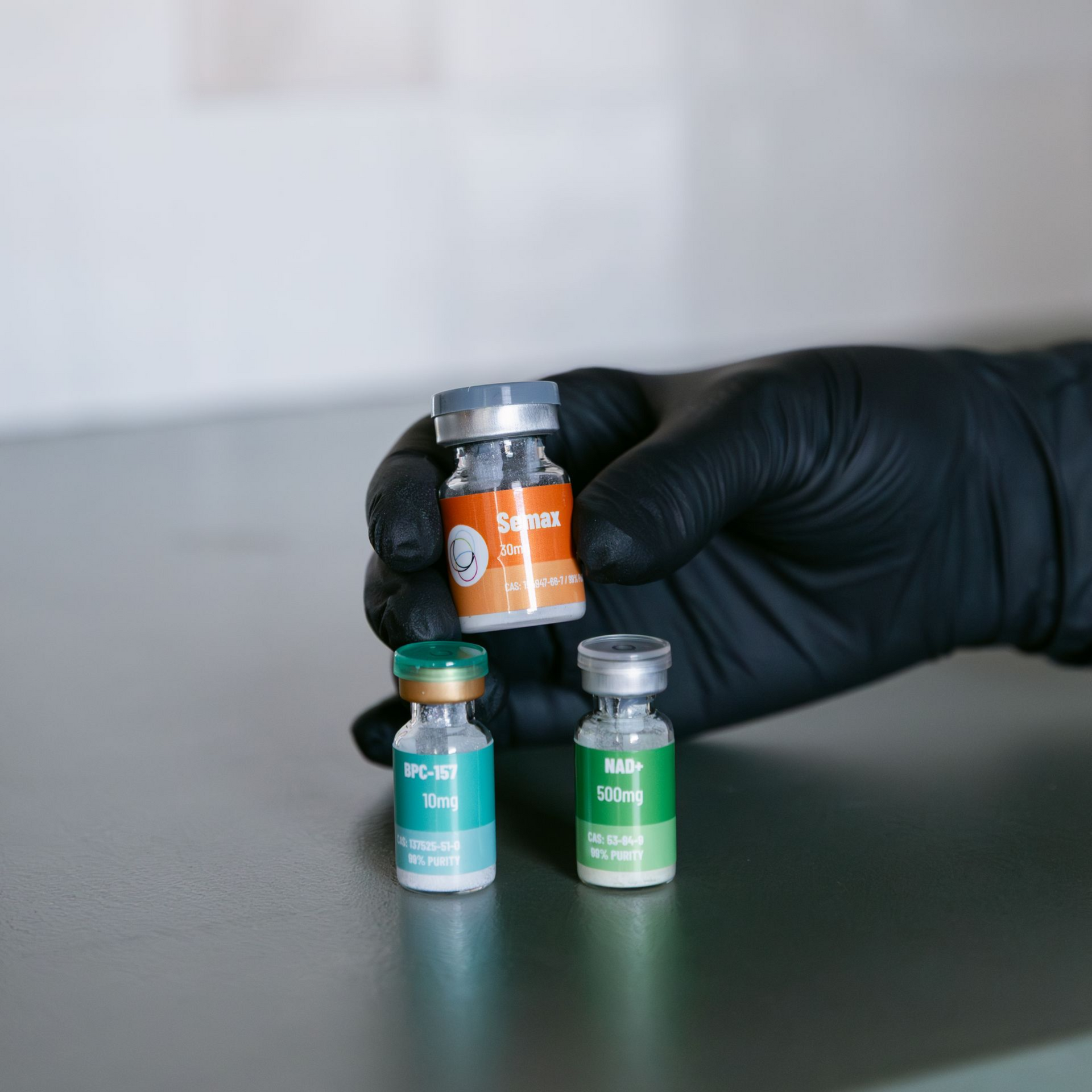
BPC-157 When inflammation is in the picture - and it almost always is - BPC-157 is one of the most versatile tools available. It supports gut integrity (critical for hormone metabolism and skin health via the gut-skin axis), reduces systemic inflammation, and promotes tissue repair. Skin that's reactive, sensitive, or slow to heal often responds beautifully to BPC-157.
CJC-1295 + Ipamorelin This combination supports natural growth hormone release, which declines with age and is closely tied to skin quality, lean muscle preservation, sleep depth, and overall metabolic function. For women in perimenopause noticing body composition changes alongside skin changes, this stack addresses both. Better sleep architecture alone - one of the benefits of optimized growth hormone - has measurable effects on skin repair and collagen synthesis.
Selank (for stress-driven skin) When cortisol is the culprit - and for many high-functioning women, it is - Selank offers meaningful support for mood stability, anxiety regulation, and stress resilience without sedation. Managing the cortisol load is one of the most underappreciated levers in skin health.
A note on peptide therapy: At REGEN Society, all peptide protocols are medically guided and personalized. Every plan starts with labs and a thorough provider consultation before any peptide stack is recommended. This isn't a one-size-fits-all approach - it's precision medicine, and your biology deserves that level of care.
The Bottom Line
Your face is telling you something. The question is whether you're addressing the message or just managing the surface.
Hormones, skin, and longevity are not separate conversations. They are the same conversation - and at REGEN Society, it's the one the practice is built to have.
If you're noticing changes in your skin that feel bigger than what your skincare routine can touch, it might be time to look deeper.
Schedule a consultation to explore what your biology is actually asking for.
Aging is inevitable. How you age is intentional.
Book a Wellness Consultation at REGEN Society in Brentwood, Tennessee. regensocietyaesthetics.com | @regensocietyaesthetics